
Gravel Driveway Edging: Why Concrete Is the Best Way to Keep Gravel in Place
The Art of Concrete Curbing: Enhancing Your Landscape with Durability and Style
When it comes to improving the look and functionality of your outdoor space, concrete curbing offers a perfect combination of durability, customization, and visual appeal. But what sets our concrete curbing apart? Let’s take a deeper dive into how our process works and why it’s the smart choice for your landscaping needs.
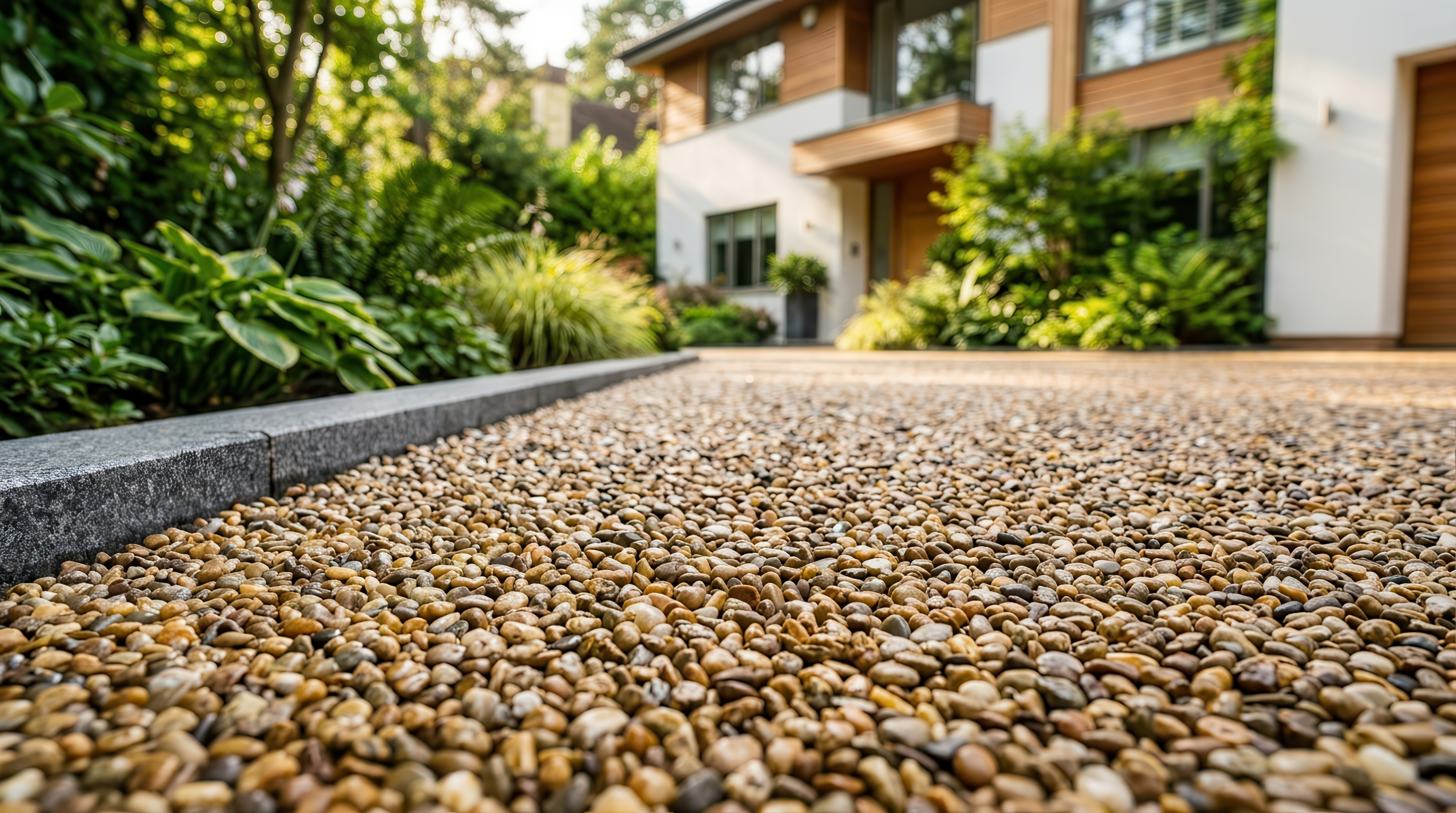
Gravel driveways are a popular choice for homeowners across the Dallas-Fort Worth area. They’re cost-effective, drain well, and give a property a distinct look that works beautifully with certain home styles and lot types. But gravel comes with one persistent problem that every gravel driveway owner knows well — it doesn’t stay where you put it.
Gravel migrates. It spreads onto the lawn, washes into the street after rain, gets kicked into garden beds by tires and foot traffic, and gradually thins out in the middle of the driveway while piling up along the edges or disappearing into the surrounding landscape. It’s one of the most common and most frustrating maintenance issues for gravel driveway owners, and it’s a problem that most temporary edging solutions only partially address.
Concrete edging is the permanent fix. This post explains why concrete edging works better than any other gravel containment solution and what DFW homeowners with gravel driveways should know before choosing an edging approach.
Why Gravel Driveways Lose Their Shape
Understanding why gravel spreads helps explain why the solution needs to be structural rather than cosmetic. Gravel displacement happens through several mechanisms simultaneously.
Vehicle tires are the primary culprit. Every time a vehicle turns onto or off of a gravel driveway, the tires push gravel laterally — outward toward the edges and beyond. Over dozens of daily passes, this lateral pressure gradually pushes gravel off the driveway surface and into the surrounding lawn or landscape beds.
Rainwater runoff accelerates the process significantly. DFW gets intense rainfall events, especially during spring storm season, and water moving across a gravel surface carries loose gravel with it. Without a solid containment edge, gravel washes off the driveway edges and down any slope in the property grade.
Foot traffic along driveway edges kicks gravel off the surface with every pass. Children, pets, and general household activity all contribute to gravel migration, especially near the edges where containment is most needed.
Wind — not a primary factor for most hardscape materials — actually moves small gravel over time in DFW, where strong seasonal winds are common.
All of these forces act on gravel continuously. Without a solid, permanent edge to contain it, gravel loss is inevitable and ongoing.
Why Temporary Edging Solutions Fall Short
Most gravel driveway owners try at least one temporary edging solution before concluding that something more permanent is needed. The most common options are plastic landscape edging, metal edging, and timber or railroad tie borders. Each has the same fundamental limitation — they’re not strong enough or permanent enough to contain gravel under the forces described above.
Plastic landscape edging is simply not rigid enough to resist the lateral pressure of vehicle tires pushing gravel outward. The edging flexes, shifts, and eventually pops out of the ground, creating gaps where gravel escapes freely. In DFW’s clay soil, plastic edging that shifts during wet soil expansion rarely returns to its original position when the soil dries.
Metal edging is more rigid than plastic but still subject to bending under repeated lateral pressure from vehicle tires. It also corrodes over time in moist soil conditions, eventually deteriorating to the point where it provides no meaningful containment.
Timber and railroad tie borders provide better containment than strip edging but create their own problems. They rot over time, shift as the soil moves, and are difficult to install in the curves and angles that most driveways require. They also require significant maintenance to stay in place and looking presentable.
None of these solutions addresses the root problem: gravel containment requires a rigid, permanent, continuous barrier that can resist vehicle pressure, water flow, and soil movement simultaneously.
Why Concrete Edging Is the Right Solution for Gravel Driveways
Concrete edging provides everything that temporary edging solutions lack. It’s rigid, permanent, continuous, and strong enough to resist the forces that cause gravel migration.
The rigidity of properly mixed concrete — J&J Custom Curbing uses fiber-enhanced concrete cured to 3,000 PSI, the same strength standard as residential driveways — means the edging doesn’t flex or shift when vehicle tires push gravel against it. The gravel hits the concrete border and stays on the driveway side rather than being pushed through or over the edge.
The continuity of extruded concrete edging — installed as one seamless, uninterrupted piece with no joints or gaps — means there are no weak points where gravel can escape. Every inch of the driveway perimeter is covered by solid, unbroken concrete.
The permanence of concrete edging means it doesn’t need to be replaced, repositioned, or reinforced seasonally. Once installed correctly with proper base preparation and stainless steel cable reinforcement, concrete edging for a gravel driveway is essentially a permanent solution that handles DFW’s soil movement, temperature swings, and heavy rainfall without failing.
How Concrete Edging Is Installed Along a Gravel Driveway
The installation process for concrete edging along a gravel driveway follows the same professional steps used for all J&J Custom Curbing installations, with attention to the specific conditions of a gravel driveway perimeter.
The crew begins by establishing the edge line along both sides of the driveway. A trench is cut along this line — approximately 7 inches wide and 1.5 inches deep — and filled with a compacted sand and fill dirt mixture that creates a stable base for the concrete. This base preparation is critical in DFW’s clay soil, where an unstable base leads to shifting and settling over time.
A stainless steel airline cable is laid along the trench before the concrete is extruded. This cable runs continuously through the finished edging, providing internal reinforcement that prevents cracking, buckling, and separation as the ground shifts beneath the installation.
The extruding machine then moves along the driveway perimeter, laying fresh fiber-enhanced concrete in one continuous pass. The concrete is shaped into the chosen profile — typically a taller, more upright profile for gravel containment applications, which provides a higher barrier against lateral gravel movement than a low-slope mower profile would.
Once installed and cured, the concrete edging creates a solid wall along the driveway perimeter that keeps gravel contained on the driveway surface and dramatically reduces the ongoing maintenance required to keep the driveway looking clean and defined.
Profile and Height Considerations for Gravel Containment
One of the decisions to make when planning concrete edging for a gravel driveway is the profile height. For gravel containment specifically, a taller, more upright profile provides better containment than a low-slope profile because it presents a higher physical barrier against lateral gravel movement.
The profile also affects the visual appearance of the finished installation. A taller concrete border along a gravel driveway creates a clean, defined edge that frames the driveway clearly and gives the entire approach a polished, finished look. When colored to complement the home’s exterior or existing hardscape, the concrete edging becomes a visual feature rather than just a functional one.
Color options in neutral tones — grays, tans, and warm earth tones — all work well alongside gravel, which tends to be a natural gray or tan tone itself. A complementary color creates cohesion between the gravel surface and the concrete edge rather than visual competition between the two materials.
The Maintenance Difference Concrete Edging Makes
For gravel driveway owners, the maintenance reduction that comes with concrete edging is often the most immediately felt benefit. Without permanent edging, maintaining a gravel driveway means regularly raking gravel back onto the surface from the edges and lawn, adding new gravel to replace what’s been lost to migration and washout, and resetting or replacing failing temporary edging at least every few seasons.
With concrete edging in place, gravel stays on the driveway surface far more effectively. Less gravel migrates into the lawn, less washes away during rainstorms, and less gets kicked into surrounding landscape beds. The driveway surface stays fuller and more even, requiring less frequent gravel top-ups.
The concrete edging itself requires only a sealer application every 24 months to maintain the surface and keep it looking its best — a minor task compared to the ongoing effort of managing gravel migration without permanent containment.
Concrete Edging for Gravel Driveways vs. Pavers or Concrete Borders
Some gravel driveway owners consider paver borders or poured concrete borders as alternatives to extruded concrete edging. Both can work, but each has trade-offs.
Paver borders provide good containment but require individual units to be set and leveled, which creates joints between pavers that can shift and widen over time. In DFW’s clay soil, paver borders often require releveling within a few years as individual pavers shift with soil movement.
Poured concrete borders are more rigid than pavers but require form work and have control joints between sections. These joints are potential weak points for gravel escape and can widen as sections shift independently.
Extruded concrete edging eliminates both of these issues. No individual units to shift, no joints between sections, and no form work required. The continuous, seamless nature of extruded concrete edging is its primary advantage over both alternatives for gravel containment applications.
What Fort Worth and DFW Homeowners With Gravel Driveways Should Do Next
If you have a gravel driveway and have been dealing with ongoing gravel migration, spreading, and washout, concrete edging is the solution that addresses the problem permanently rather than requiring ongoing management.
J&J Custom Curbing serves homeowners with gravel driveways across the Dallas-Fort Worth Metroplex, installing concrete edging that’s specifically designed to contain gravel, handle DFW’s soil conditions, and deliver a finished, polished driveway appearance that holds up for decades.
Most gravel driveway concrete edging installations are completed in a single day, and all installations are backed by J&J Custom Curbing’s 5-year warranty covering major surface cracking, buckling, and separation.

Tired of chasing gravel back onto your driveway every season? J&J Custom Curbing can install permanent concrete edging along your gravel driveway anywhere in the Dallas-Fort Worth Metroplex. Contact us today to request your free consultation.


